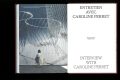
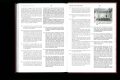
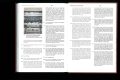
The Musée des Arts Décoratifs et du Design in Bordeaux is dedicating a comprehensive retrospective to her work. The exhibition presents a selection of objects, furniture, and archival materials such as drawings and models, offering insight into her methods and the breadth of her practice. A publication accompanying the exhibition includes contributions from the curators.
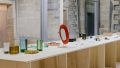
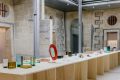
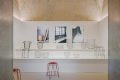
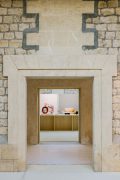
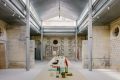
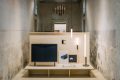
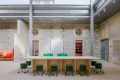
The exhibition takes place in a former prison, a site with a strong character. Rather than transforming the architecture through scenography, the intention was to introduce a sense of lightness and delicacy.
Pauline’s projects engage strongly with surfaces, materials, patterns, textures and colours. In contrast to these qualities, the scenography was conceived as something raw and neutral — elements that are rarely present in her work. Bold colours and expressive materials were deliberately avoided.
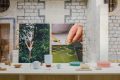
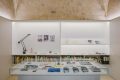
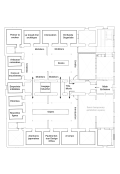
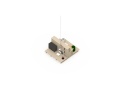
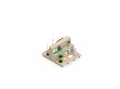
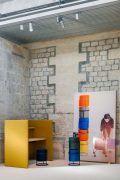
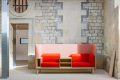
In the large courtyards, poplar wood with a subtle grain was used, alongside two large plinths designed to display the objects. In the cells, the walls were extended to the floor, so that the entire space functioned as a plinth. Everything was painted white, allowing the secondary walls and floor to merge into one continuous socle. To counterbalance the harshness of the architecture, large canvases leaning against the walls were introduced, bringing a sense of visual and physical lightness to the space.
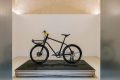
In several of the cells, reused elements sourced from the Ressourcerie and various institutions in the city of Bordeaux were integrated into the display: a workbench to present the Arita porcelains, a small lifting platform for the bicycle, and a clothing rack borrowed from the Bordeaux National Opera.
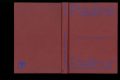
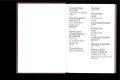
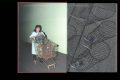
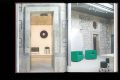
The exhibition is accompanied by the publication of a monograph, published by les presses du réel. This monograph traces the dazzling and prolific career of French designer Pauline Deltour (1983–2021) and showcases the richness of her work through images drawn from an extensive archive and contributions from curators, designers, and collaborators. Edited by Bérengère Bussioz, Cloé Pitiot, Nicolas Tiry, Etienne Tornier. Texts by Bérengère Bussioz, Konstantin Grcic, Mathilde Maître, Jonathan Olivares, Caroline Perret, Cloé Pitiot, Nicolas Tiry, Etienne Tornier. Graphic design by Lisa Sturacci